Tiiny AI Unveils World's Smallest AI Supercomputer, Redefining Personal Computing
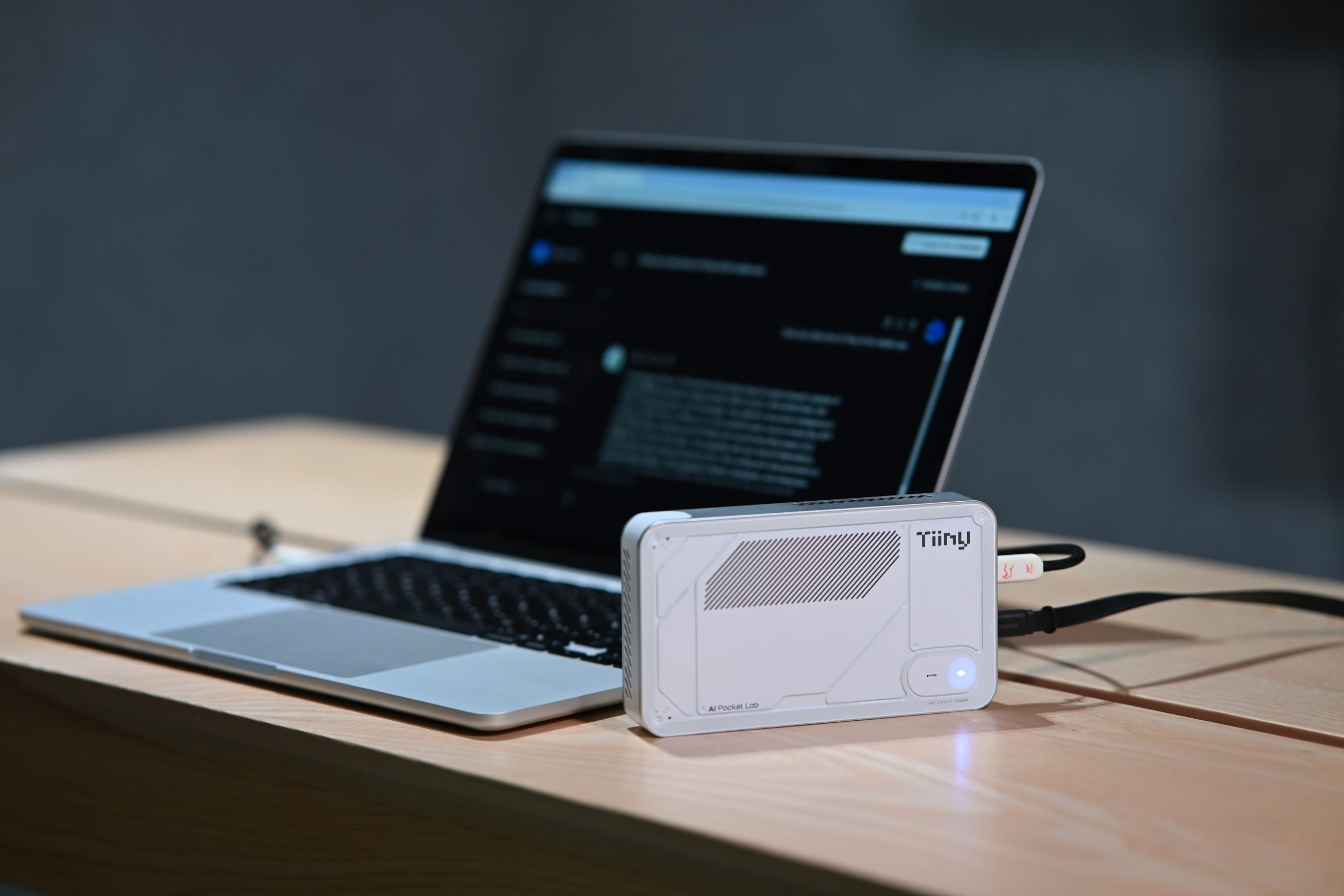
In a groundbreaking announcement, Tiiny AI Inc., a US-based deep-tech startup, has unveiled the Tiiny AI Pocket Lab, recognized by Guinness World Records as the world's smallest personal AI supercomputer.
This pocket-sized device, officially verified under the category 'The Smallest MiniPC (100B LLM Locally)', marks a significant milestone in making powerful AI accessible to individuals.
The Power of Tiiny AI Pocket Lab
The Tiiny AI Pocket Lab can run a massive 120-billion-parameter large language model (LLM) entirely on-device, eliminating the need for cloud connectivity or high-end GPUs.
This innovation positions Tiiny AI at the forefront of a new era where personal AI supercomputing is no longer confined to large data centers or corporate environments.
A Historical Leap in AI Miniaturization
Historically, supercomputers were massive machines reserved for government agencies and research institutions, often occupying entire rooms and consuming vast amounts of energy.
The journey from those behemoths to the compact Tiiny AI Pocket Lab reflects decades of advancements in semiconductor technology and energy efficiency.
Impact on Industries and Individuals
With a power envelope of just 65W, this device offers energy-efficient intelligence, reducing the carbon footprint compared to traditional GPU-based systems.
Its potential impact spans industries like education, healthcare, and software development, empowering professionals and hobbyists to harness AI capabilities directly from their laptops or desks.
Looking ahead, the democratization of such technology could inspire a wave of AI-driven innovation, enabling creators to build solutions without relying on expensive cloud services.
Challenges and Future Prospects
While the Tiiny AI Pocket Lab is a marvel, questions remain about its scalability and accessibility to the average consumer, given the likely high cost of such cutting-edge tech.
Nevertheless, Tiiny AI’s vision points to a future where personal supercomputers become as commonplace as smartphones, potentially reshaping how we interact with technology daily.
For now, this unveiling, first reported via sources like Tech in Asia, signals that the future of compact AI power is already here.