Top 5 Merchant Account Providers for Matchmaking Businesses

Running a matchmaking business means juggling recurring subscriptions, elevated chargeback rates, and a payment processor that's ready to flag you the moment something looks unusual. Pick the wrong partner and you might find your funds frozen mid-month or your account dropped without a word of warning, so choosing the right merchant account providers for matchmaking businesses matters. This list covers five providers worth examining closely, ranked by how well they handle the specific pressures matchmaking operators actually face.
What to Look for in a Matchmaking Merchant Account Provider
Most banks drop matchmaking and dating-adjacent services straight into the high-risk category, which means standard processors often reject the application outright or slap on tight reserve requirements. Before you start comparing options, it's useful to know that dedicated accounts built for this space - the MobiusPay online dating merchant account is structured around exactly these needs - typically bundle recurring billing, chargeback interception, and multi-currency support together. Know what to look for. Transparent fee disclosure, a processor with established high-risk banking relationships, and a chargeback management program that catches disputes before they ever become formal chargebacks are all non-negotiable.
1. MobiusPay
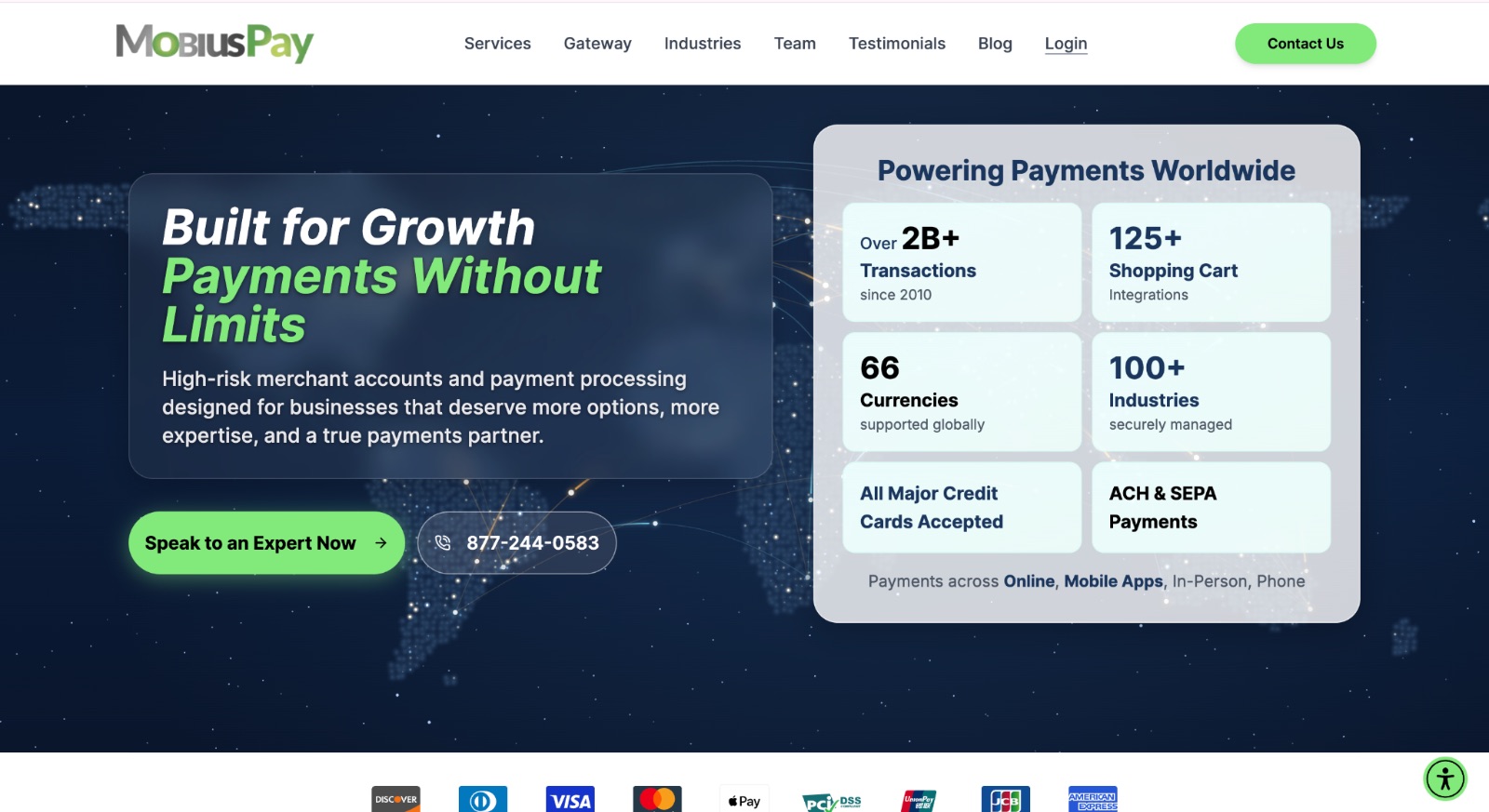
MobiusPay, based in St. Petersburg, Florida, has operated in the high-risk processing space since 2010, accumulating over a century of combined experience across its team in banking, payments, and customer service. The company specializes in serving online dating and matchmaking platforms through MobiusPay, online dating merchant account, which handles the chargeback complexities and regulatory requirements that typically challenge relationship-focused services.
Where it fits: Matchmaking businesses that need a processor already comfortable with the vertical will find MobiusPay has the infrastructure for it. The proprietary MobiusPay Gateway has cleared more than 1.2 billion transactions and $68 billion in processing volume, supports 67 currencies, and connects with 1,200-plus technology partners, meaning most existing e-commerce stacks won't need rebuilding. The MobiusPay Dispute Resolution program is particularly relevant here; it's designed to intercept chargebacks before they become formal disputes, which is the number-one operational headache for subscription-based matchmaking operators. MobiusPay holds an A+ BBB rating with zero complaints in the last 36 months, and it received Inc. Power Partner Award recognition in both 2023 and 2024. Pricing isn't listed publicly; rates are quoted per merchant and can exceed 5% for high-risk accounts, so operators should request a custom quote.
2. Host Merchant Services
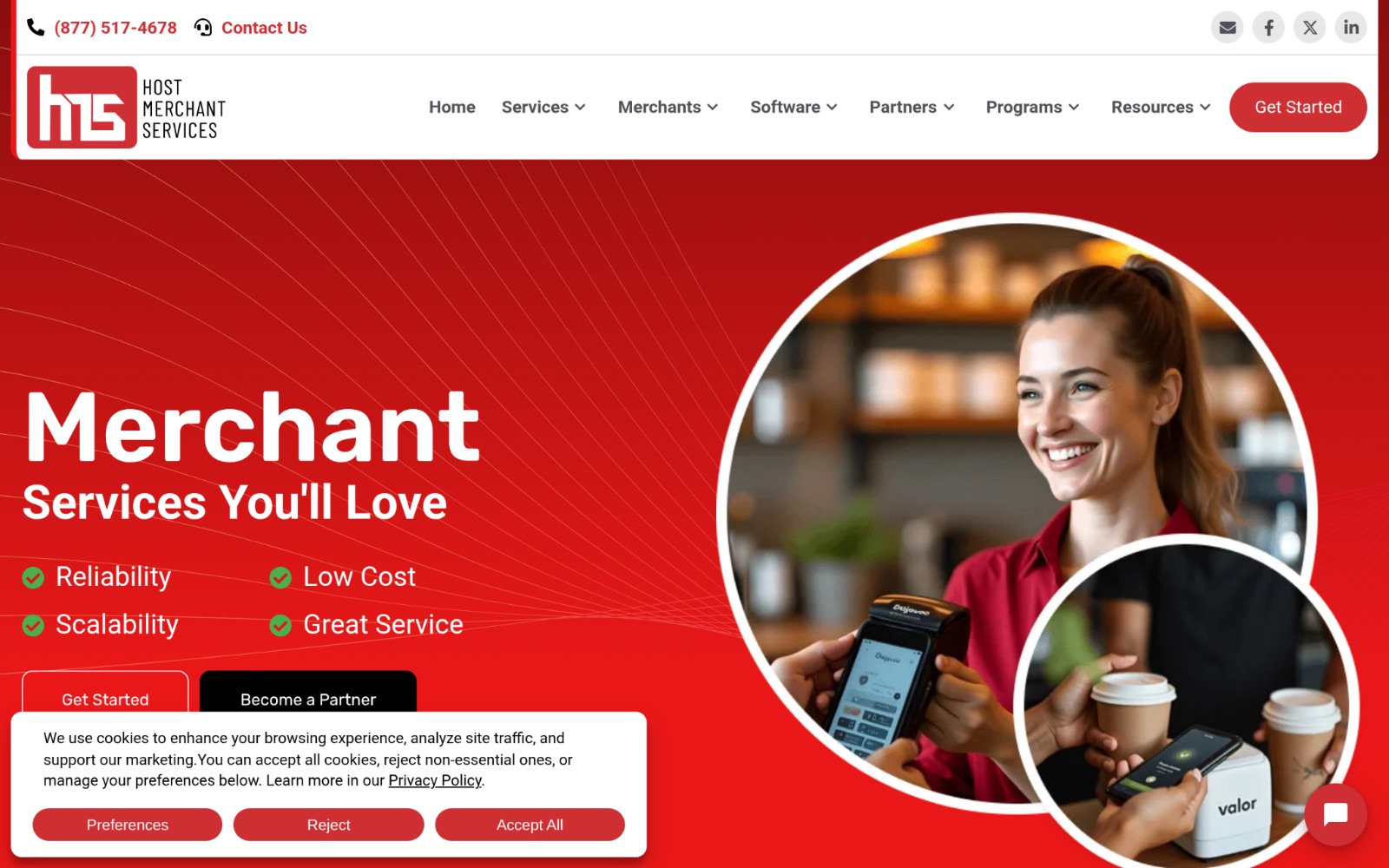
Founded in 2010 by Lou Honick and headquartered in Newark, Delaware, Host Merchant Services is a registered Independent Sales Organization with Visa and Mastercard, sponsored by Wells Fargo Bank.
Where it fits: The company targets small and mid-sized merchants and is well regarded for transparent pricing, no annual fee, no application fee, no monthly minimums, and a low PCI fee. Its product range covers virtual terminals, e-commerce gateways, ACH processing, and recurring billing, which addresses the subscription mechanics most matchmaking operators rely on. Support runs 24/7 and is U.S.-based. Host Merchant Services was a 2025 Inc. 5000 honoree at No. 3,044, reporting 133% three-year growth.
Worth checking: The company's main focus is retail, hospitality, healthcare, and professional services. Matchmaking operators should confirm directly whether their specific account type falls within the banks HMS works with, since not all high-risk verticals fit its standard placement pipeline.
3. Payment Cloud
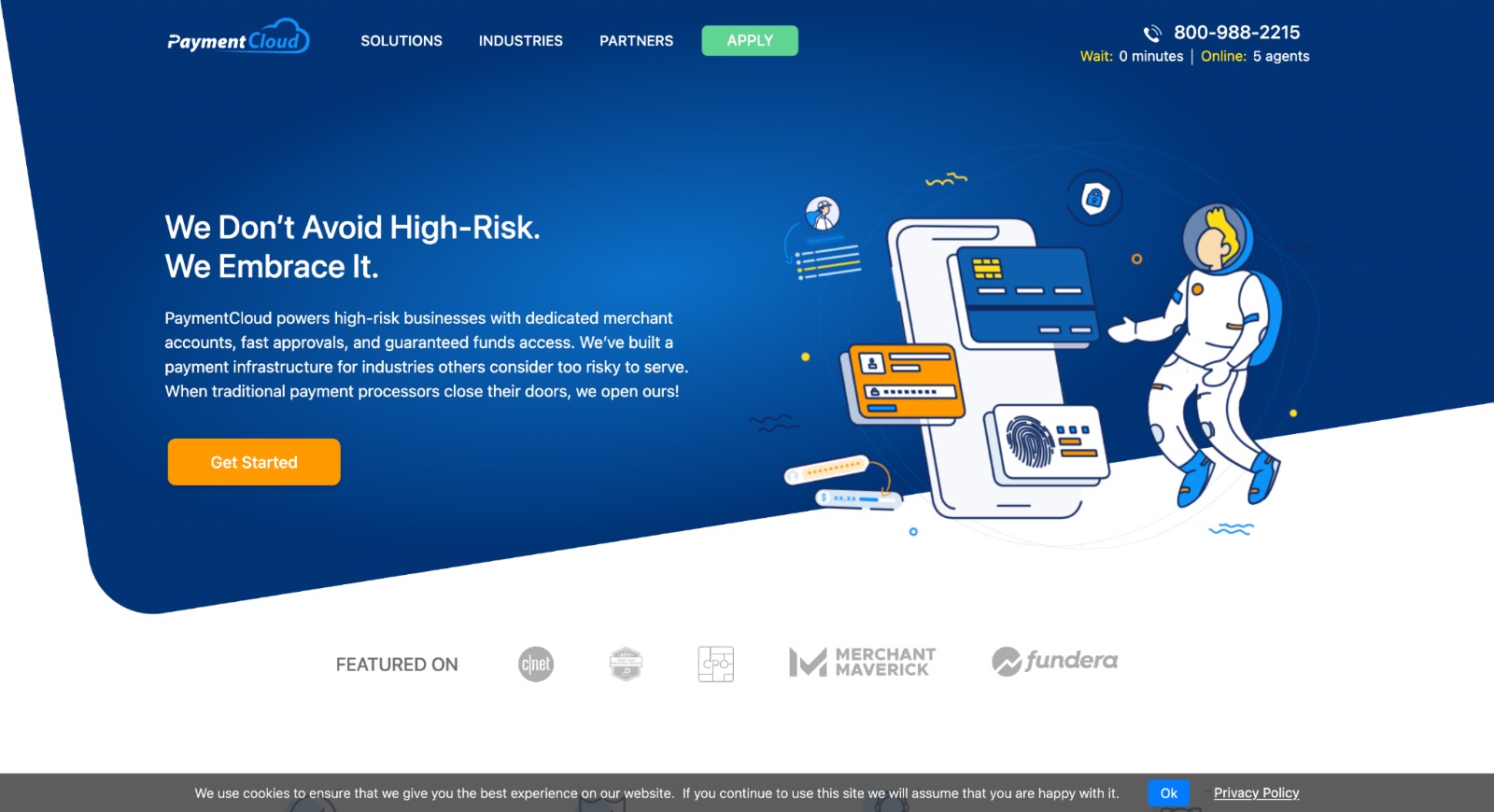
PaymentCloud was founded in 2015 and is headquartered in Encino, California, with roughly 69 employees as of early 2026. CEO Shawn Silver has positioned the company explicitly around industries mainstream processors decline.
Where it fits: Payment Cloud works with a wider pool of acquiring banks than most generalist processors, which is how it places accounts in CBD, adult services, subscription businesses, and similar categories that others reject. For a matchmaking operator, that bank diversity matters, it raises the odds of approval and reduces the chance of sudden account termination. The company offers no setup fees, free fraud and chargeback tools, machine learning-based fraud prevention, and dedicated account representatives who help with application, equipment setup, and software configuration from day one.
Worth checking: Pricing isn't publicly disclosed. Merchants should request a written rate quote and confirm which acquiring bank will hold their account before signing.
4. adyen
Adyen was founded in 2006 in Amsterdam by Pieter van der Does and Arnout Schuijff. The company processes €1.4 trillion annually, operates 29 global offices, and carries direct acquiring and banking licenses in multiple regions.
Where it fits: Adyen is built for enterprise scale. Its single unified platform handles online, mobile, and in-store payments across 150-plus currencies and 200-plus local payment methods through one API, with 99.999% reported availability. Clients include Meta, Uber, H&M, and Microsoft. A matchmaking business operating across multiple markets - or expecting substantial international volume - will benefit from Adyen's global acquiring footprint and the data analytics layer built into the same platform.
Worth checking: Adyen's model is designed for high-volume enterprise accounts. Smaller matchmaking operations may find the minimum volume requirements and the setup complexity a poor fit for their current stage.
5. Stripe
Stripe was founded in 2010 by John and Patrick Collison and is headquartered in San Francisco. The company processed $1.9 trillion in payments volume in 2025, serves around one million customers, and employs approximately 8,500 people as of 2026.
Where it fits: Stripe's strength is its developer-friendly API and the breadth of its product stack, payments, billing, fraud prevention via Radar, capital, card issuing, treasury, and stablecoin connection are all accessible through one account. Recurring billing and subscription management are particularly mature features, and Stripe supports 135-plus currencies. For a tech-forward matchmaking platform, Stripe's tooling lets engineering teams build exactly the payment flow they want.
Worth checking: Stripe operates as an aggregated payment service provider, not a dedicated high-risk processor. Matchmaking accounts fall into a gray zone, and Stripe has a documented history of account holds and terminations in higher-risk categories. Operators should review Stripe's prohibited and restricted business list before building on the platform.
Finding the Right Payment Processor for a Matchmaking Business
These five providers represent opposite ends of the spectrum, high-risk specialists on one side, enterprise infrastructure companies on the other. A small matchmaking operation that's getting declined by Stripe should start with Payment Cloud or MobiusPay. A well-funded platform operating across multiple countries has stronger reason to consider Adyen's single-platform architecture. Host Merchant Services sits somewhere between the two and works well for operators who want straightforward pricing without the complexity that comes with enterprise tools. Which merchant account providers for matchmaking businesses make the most sense ultimately comes down to processing volume, geographic reach, and how much technical setup time you can absorb.
How These Providers Were Selected
Each provider on this list was evaluated for its ability to accept and retain matchmaking or dating-adjacent merchant accounts, its chargeback management tools, fee transparency, recurring billing support, and the breadth of its banking relationships. Enterprise-scale providers were included because some matchmaking businesses operate at scale and need global coverage.
Bottom Line
Merchant account providers for matchmaking businesses can't just run a credit card, they've got to manage chargebacks, support recurring billing, and hold steady when processing volume climbs. High-risk specialists offer a stability that general processors rarely can. Enterprise options like Adyen and Stripe fit certain situations, but they carry real risk for operators who haven't first confirmed their vertical is explicitly supported. Get written rate quotes. Confirm the acquiring bank relationships before you sign anything.