DART Asteroid Impact Crater Revealed: New Data Fuels Space Defense Innovation
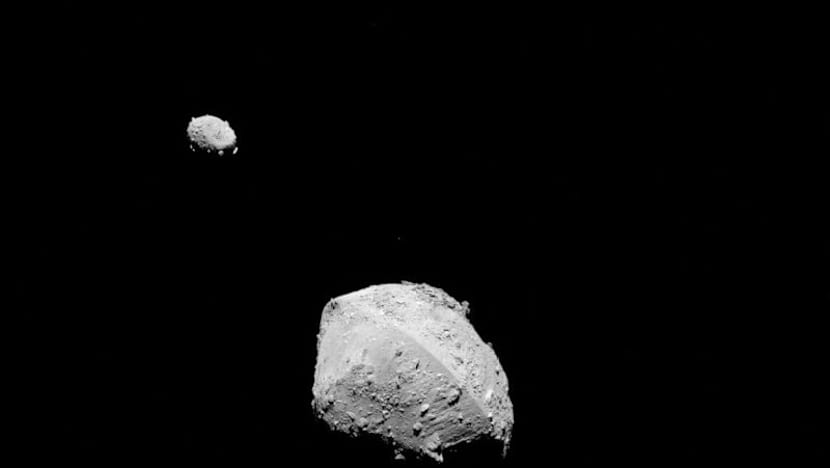
The DART spacecraft's 2022 collision with Dimorphos has now been examined up close, revealing how a kinetic impactor reshapes a small asteroid.
This latest view from the Hera mission adds critical details on physical changes that earlier orbit measurements could not capture.
Understanding the Impact Mechanics
Dimorphos measures about 151 meters across and orbits the larger asteroid Didymos.
The impact created a large crater covering much of one side while leaving the opposite side largely unchanged.
Dimorphos now tumbles chaotically with numerous boulders scattered in the system.
These observations help scientists model how future deflection missions might perform against different asteroid types.
Opportunities for Founders in Planetary Tech
Space startups focused on propulsion and imaging systems stand to gain from refined data on impact outcomes.
Over the next 12 months, closer Hera flybys and CubeSat deployments will release higher-resolution interior scans that could guide commercial sensor development.
Historical patterns show that successful deflection tests like DART accelerate private investment in related hardware, similar to how early satellite missions boosted the launch industry.
Founders in materials science may find new demand for impact-resistant designs used in both defense and resource prospecting.
International collaboration on these missions also opens doors for cross-border tech partnerships that reduce development costs.
Overall the findings strengthen the case for proactive asteroid monitoring as a growing sector with long-term commercial upside.