Grab and ST Engineering Launch Drone Food Delivery Pilot in Singapore: A Step Toward Future Logistics
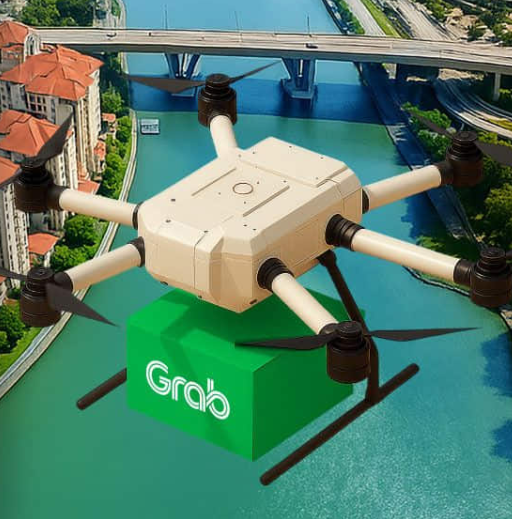
Grab, the Southeast Asian ride-hailing and delivery giant, has partnered with ST Engineering to launch an innovative drone food delivery pilot in Singapore, marking a significant milestone in urban logistics.
This three-month trial, initiated in the Tanjong Rhu neighborhood, aims to test the efficiency and safety of autonomous drones in delivering food orders across challenging routes like the Kallang River.
Revolutionizing Last-Mile Delivery with Drone Technology
The pilot, which operates from Tuesday to Sunday between 10 am and 6 pm, is currently in its internal testing phase, as reported by Grab.
By integrating drones into their delivery network, Grab seeks to complement human riders rather than replace them, addressing inefficiencies in areas with geographical barriers.
A History of Innovation in Singapore’s Delivery Sector
Singapore, known as one of the world’s most tech-forward cities, has long been a testing ground for cutting-edge solutions in urban mobility and logistics.
Grab’s latest venture builds on its history of innovation, following previous experiments with autonomous vehicles and AI-driven delivery optimization in the region.
Potential Impact on Urban Logistics and Environment
The use of drones could significantly reduce delivery times and lower carbon emissions, aligning with Singapore’s sustainability goals and Grab’s commitment to greener operations.
Local residents in Tanjong Rhu may experience faster food deliveries, while businesses could benefit from reduced operational costs if the pilot proves scalable.
Challenges and Future Prospects of Drone Deliveries
Despite the promise, challenges such as regulatory hurdles, safety concerns, and public acceptance of drone technology remain critical areas to address during this trial.
Looking ahead, a successful pilot could pave the way for broader adoption of drone deliveries across Singapore and potentially other Southeast Asian markets where Grab operates.
Industry experts believe this initiative could set a precedent for how autonomous technologies integrate into everyday services, reshaping the future of last-mile delivery.