Chinese Robotics Innovator Daimon Secures Major Funding from China Mobile for AI Expansion
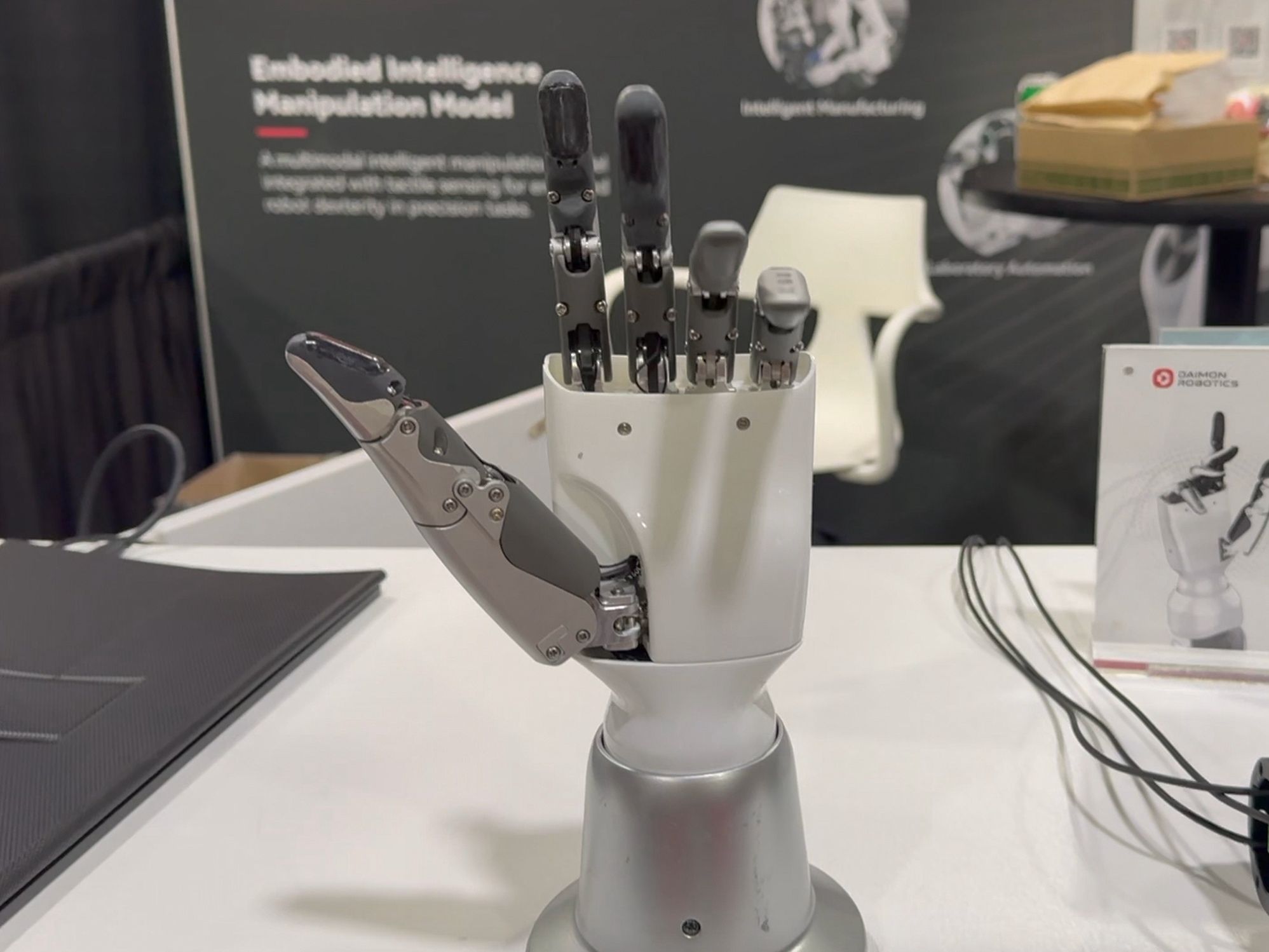
Shenzhen-based humanoid robotics startup Daimon Robotics has recently announced a significant funding boost from a fund backed by China Mobile, the country's largest mobile operator.
This investment, facilitated through China Mobile's Lianchang Fund, underscores the growing interest in robotics and artificial intelligence (AI) within China's tech ecosystem.
Daimon's Journey and Vision in Robotics
Founded by Wang Yu, dean of the robotics institute at the Hong Kong University of Science and Technology (HKUST), and his student Duan Jianghua, Daimon has quickly gained attention for the remarkable dexterity of its robots.
The company aims to push the boundaries of humanoid robotics, focusing on applications that could transform industries like manufacturing, healthcare, and logistics.
Impact of China Mobile's Backing
This fresh injection of capital is expected to accelerate Daimon's research and development in AI-driven robotics, positioning the startup as a key player in China's competitive tech landscape.
The backing from a state-supported giant like China Mobile also highlights the strategic importance of robotics in China's broader push for technological self-reliance amidst global competition.
Historical Context of Robotics in China
China has been aggressively investing in robotics over the past decade, with the government identifying it as a critical sector under its Made in China 2025 initiative.
Startups like Daimon are part of a wave of innovation that has seen billions of dollars funneled into the industry, spurred by both private venture capital and state funds.
Future Prospects and Challenges
Looking ahead, Daimon's advancements could play a pivotal role in addressing labor shortages in China, especially as the population ages and industries seek automation solutions.
However, the company faces stiff competition from other Chinese robotics firms like Leju Robotics and global players such as Boston Dynamics, necessitating continuous innovation.
The future of Daimon also hinges on navigating geopolitical tensions, as the robotics sector often falls under scrutiny in international tech rivalries.
With this funding, Daimon is well-positioned to scale its operations and potentially redefine how humanoid robots integrate into everyday life, marking a new chapter in China's tech ambitions.