AI Denial Poses Major Enterprise Risk: Why Ignoring AI Progress Threatens Business Success
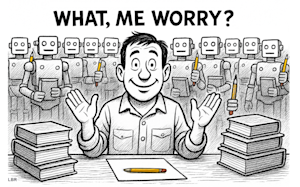
In a rapidly evolving technological landscape, a growing number of businesses are at risk due to a pervasive trend of AI denial, dismissing the transformative potential of artificial intelligence as mere hype or 'slop.'
This skepticism, as highlighted in recent industry discussions, overlooks the exponential advancements in AI models and their real-world applications, potentially leaving companies vulnerable to competitive disadvantage.
The Historical Context of AI Skepticism
The concept of AI denial is not new; it echoes past 'AI winters' where inflated expectations led to periods of disillusionment and reduced investment.
However, unlike previous cycles, today’s AI boom—sparked by breakthroughs like ChatGPT three years ago—represents a tectonic shift with tangible benefits already realized by 20% of organizations, according to recent data.
Current Impact on Enterprises
Despite significant investment—with 85% of companies increasing AI budgets in 2025, per Deloitte reports—a vocal chorus continues to diminish AI’s capabilities, labeling outputs as low-quality or irrelevant.
This dismissive attitude obscures the remarkable progress of frontier models like Gemini 3, which are driving efficiency and innovation across sectors from healthcare to logistics.
For enterprises, ignoring these advancements risks not only operational inefficiencies but also a security crisis, as employees turn to unvetted 'shadow AI' tools to bypass outdated systems, costing millions in potential breaches.
Broader Societal and Economic Implications
Beyond individual businesses, AI denialism fuels societal fears about job loss and ethical concerns, further polarizing public sentiment and slowing responsible adoption.
Experts warn that this collective denial could hinder global economic growth, especially as competitors in regions embracing AI gain a strategic edge in supply chains and procurement.
Looking to the Future of AI Integration
Looking ahead, the trajectory of AI suggests even greater integration into daily workflows, with 91% of organizations planning further investment by 2026, signaling a new era of digital transformation.
Business leaders must balance skepticism with informed adoption, focusing on ethical oversight and strategic implementation to mitigate risks like algorithmic bias and data privacy issues.
Ultimately, overcoming AI denial is not just about embracing technology but about securing a future where innovation drives sustainable growth and competitive advantage.